



At present, amid the global wave of actively addressing climate change and fully promoting green development, freight logistics — the arterial system of the national economy — is accelerating its transformation towards green and low-carbon development.
In recent years, China has attached great importance to the green and low-carbon development of freight logistics and introduced a series of strong policy measures. From the "14th Five-Year Plan for the Development of Modern Logistics" clearly proposing to promote green logistics development, to various localities formulating new energy truck promotion plans and optimizing freight vehicle traffic policies.
These precise and effective policy measures have pointed out the development path for freight logistics enterprises and injected strong momentum into the industry's green transformation. With strong policy support, the application of new energy trucks in urban distribution, port collection and distribution, and other fields has continued to expand, and a green development pattern in the freight logistics industry is gradually taking shape.
Beyond policy guidance, freight logistics enterprises have also taken the initiative to shoulder their social responsibility for green development. Many large logistics enterprises have formulated carbon emission reduction targets and increased investment in the purchase of new energy vehicles, the R&D of energy-saving technologies, and the promotion of green packaging.
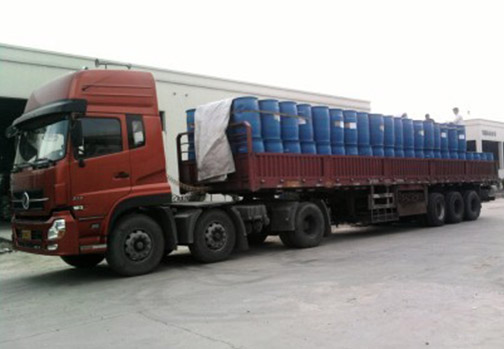
Loading, inspection, departure... Recently, more than a dozen hydrogen fuel cell heavy trucks carrying over 300 tons of cargo set off from a logistics park in Dezhou, Shandong, heading for Chengyang District, Qingdao. This was the first transportation task of the hydrogen fuel cell heavy truck fleet, marking the official operation of Fuyou Truck's first "Hydrogen-Powered Zero-Carbon New Artery".
In the future, all freight vehicles on this dedicated line will operate with hydrogen fuel, replacing the transportation capacity of fuel-powered vehicles to achieve zero-emission freight transport on the line. The total length of the dedicated line is about 450 kilometers, passing through major freight hubs such as Dezhou Modern Logistics Park, Jinan Gaishi International Logistics Park, Weifang Comprehensive Bonded Zone Logistics Park, and Qingdao Qianwan International Logistics Park.
"On the Dezhou-Qingdao dedicated line, the first batch of hydrogen fuel cell heavy trucks has replaced diesel heavy trucks, creating a zero-carbon emission dedicated line model," said Wang Lei, Operation Director of Fuyou Truck. "In the future, with the successive introduction of relevant support policies for hydrogen fuel cell heavy trucks and the improvement of hydrogen refueling infrastructure, we will promote the opening of more similar dedicated lines."
In addition to the application of clean energy such as hydrogen, the rapid iteration of emerging technologies such as new energy technology, artificial intelligence (AI), and the Internet of Things (IoT) has also injected new vitality into the green transformation of freight logistics.
In some cities, pure electric cold chain logistics vehicles have been put into use, achieving zero emissions while reducing operating costs. The application of AI and IoT technologies has made logistics equipment more intelligent and efficient: intelligent warehousing systems can automatically adjust temperature and humidity according to the storage needs of goods, reducing energy waste; intelligent transportation monitoring systems can real-time monitor the operation status of vehicles, promptly detect and resolve faults, and improve transportation safety and efficiency.
Source: People's Network
 Hot news